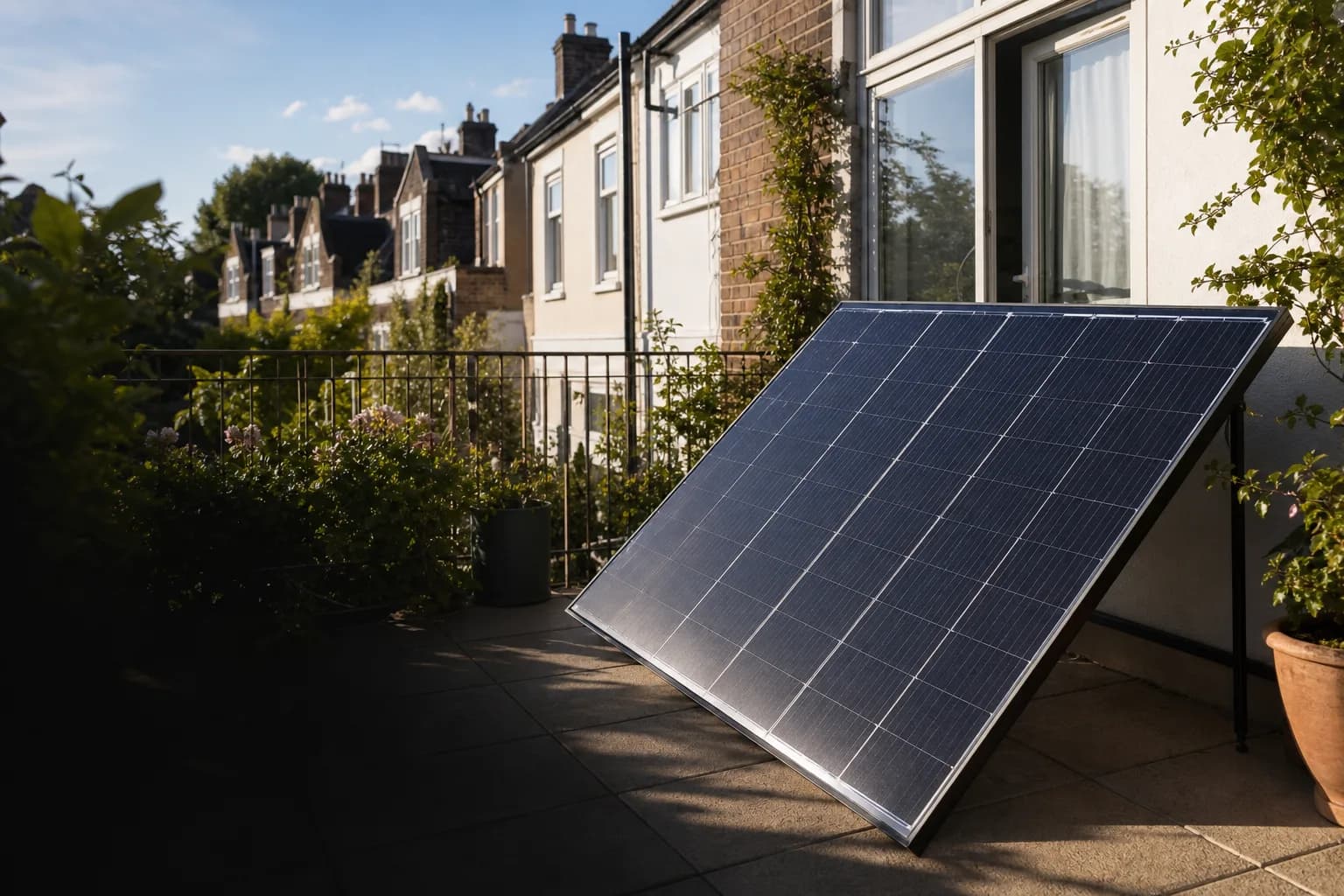
Home plug-in solar
Reduce household electricity use
Start with savings and payback, then check UK rules and product evidence.
Plan home solarUK plug-in solar · check before you buy
PlugInSolarCheck is built around the new UK plug-in solar route: exact ENA references, current compliance evidence, realistic household savings and buyable kits that match the evidence.
Great Britain launch update
Not every “800W” kit qualifies: check the exact complete system before buying or connecting it.
Reviewed by George Brocklehurst — Electrical EngineerLast checked 7 October 2026
Automated plug-in solar evidence monitoring is current; product prices and stock retain their own checked dates. How PlugInSolarCheck checks evidence and handles corrections.
Plug-in solar: start here
Current reader offer · direct partner
Use code PLUGSLR20 on the Bolt 460W or Bolt 920W. Both exact Bolt references now have direct ENA Connect Direct records retained by PlugInSolarCheck, so they are shown as ENA-confirmed compliant.
Offer applies to the solar-only Bolt systems above. Prices and stock can change. The commercial relationship does not determine compliance status or product suitability.
Plug-in solar savings calculator
Estimate annual generation, self-use, savings and payback, then take the result into the compliance tracker and buying guide.
Solar Reality Check
UK plug-in solar payback estimator
No spreadsheets. No solar jargon. Just a realistic yes/no answer in 30 seconds.
Generation
680 kWh/yr
Likely saving
£95/yr
Payback
6.3 yrs
Your realistic annual saving
£95
Worst
£76
Likely
£95
Best
£124
Worth a serious look
Your setup has a realistic payback window. The numbers look promising if the kit price is accurate.
Calculator inputs
Most plug-in kits are likely to sit around 400W–800W.
Use this as your target budget when comparing kits.
Use your unit rate from your energy bill.
Panel direction
Daytime usage
The bit most calculators hide
Used
340 kWh/yr
Likely unused
340 kWh/yr
If you run washing machines, dishwashers, dehumidifiers or charging during sunny hours, your savings improve. If the house is empty all day, payback gets worse.
Your payback depends heavily on the kit price. Compare a few sensible options before buying — cheaper kits can often beat premium ones on return.
Portable power stations are a different product category and are not a substitute for a verified mains-connected plug-in solar system.
Compare the right product categoryShareable result
Payback: 6.3 years. Unused energy: 50%. Verdict: Worth a serious look.
Planning an off-grid outbuilding?
Off-grid batteries and portable power stations need a different calculation from household plug-in solar savings. Start with daily watt-hours, peak appliance watts and winter charging limits.
Read the garden-office solar guideStay on the plug-in solar route
Secondary tools
These are still useful, but they now sit below the main plug-in solar journey so the site stays focused on its specialist purpose.
Use these when you are planning a shed, garden office, camping setup or independent appliance power rather than mains-connected plug-in solar.
Home plug-in solar
Start with savings and payback, then check UK rules and product evidence.
Plan home solar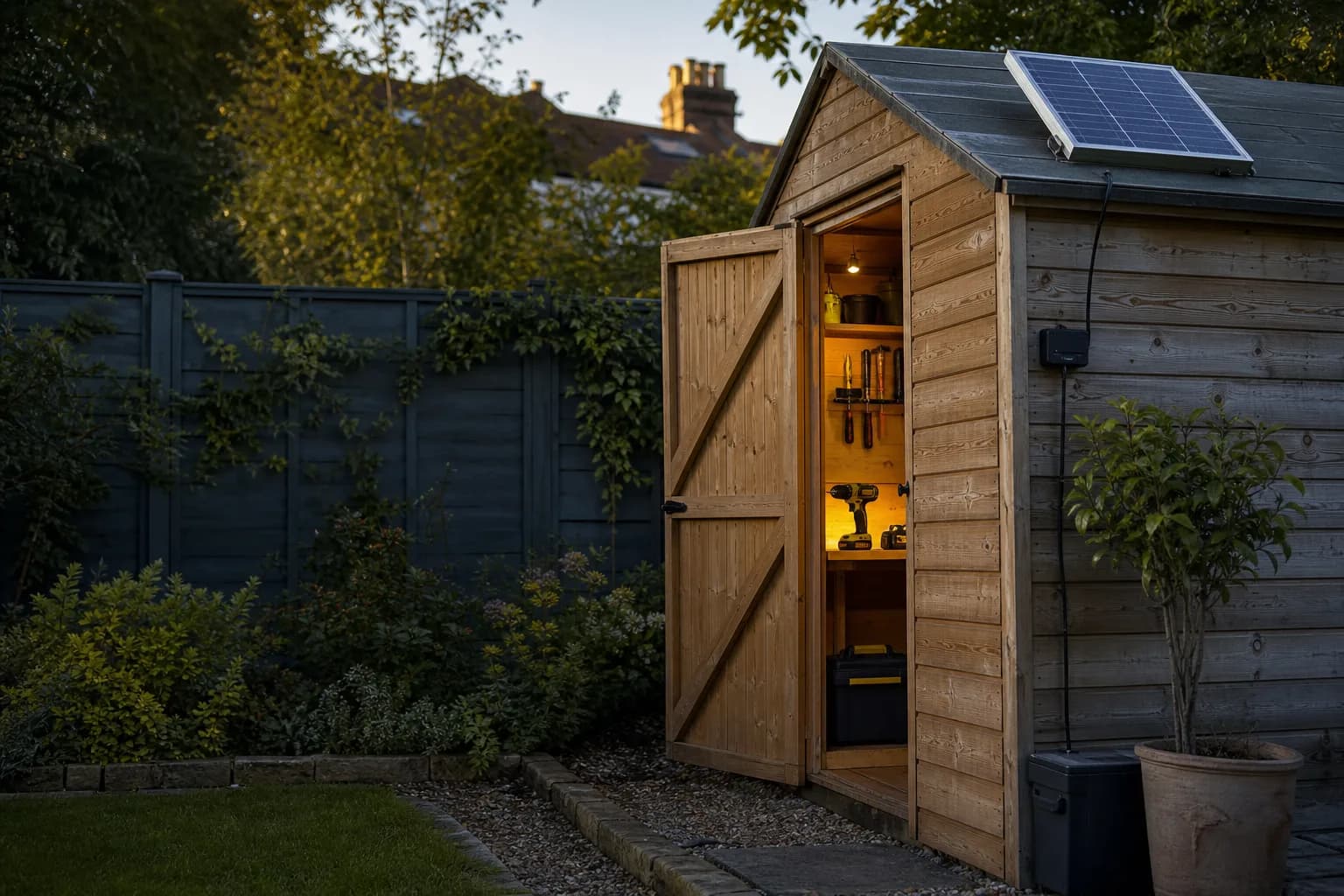
Shed and workshop
Work from lights, charging and tools to battery, inverter and panel requirements.
Build your shed shortlist
Garden workspace
Plan dependable off-grid power for efficient daily workspace loads.
Plan your workspace
Camping and touring
Build a trip around real appliances, reserve and realistic solar charging.
Build your camping setupAppliance, shed, garden-office and camping tools for off-grid or portable-power decisions.
Appliance power checker
Check battery, inverter and solar requirements for a UK appliance.
Check an applianceMains-connected planning
Estimate generation, annual savings, unused energy and payback.
Calculate home savingsShed and workshop
Size battery storage, inverter output and panels for shed loads.
Size a shed systemGarden workspace
Plan reliable power for laptops, monitors, networking and lighting.
Size an office systemPortable off-grid
Estimate trip energy, portable battery, inverter and solar needs.
Plan a camping setupPortable power, off-grid kits and measurement tools remain available without competing with the plug-in solar route above.
Separate grid-connected systems, off-grid kits and portable power.
Explore buying guideCompare capacity, output, solar input and suitable portable loads.
Explore buying guideChoose between an integrated station and a component-based system.
Explore buying guideTurn estimated office loads into a practical equipment shortlist.
Explore buying guideEstimates are usually enough. Measure real watts or kWh only when you want to refine the result.
Explore buying guideAdditional decision guides, including plug-in solar registration and off-grid alternatives.
See the rules now in force, exact-system compliance checks and safer alternatives.
Read guideChoose between plug-in, portable, off-grid and installed solar.
Read guideUnderstand self-use, complete cost and conservative payback.
Read guideFind the correct calculator by connection type and use case.
Read guideUnderstand the simple network-notification duty without scare stories or legal jargon.
Read guideAnalytics preference
We use anonymous analytics to understand how the site is used. You can change this choice at any time.